Moving with an IEP? What Parents Need to Know Before Changing Schools
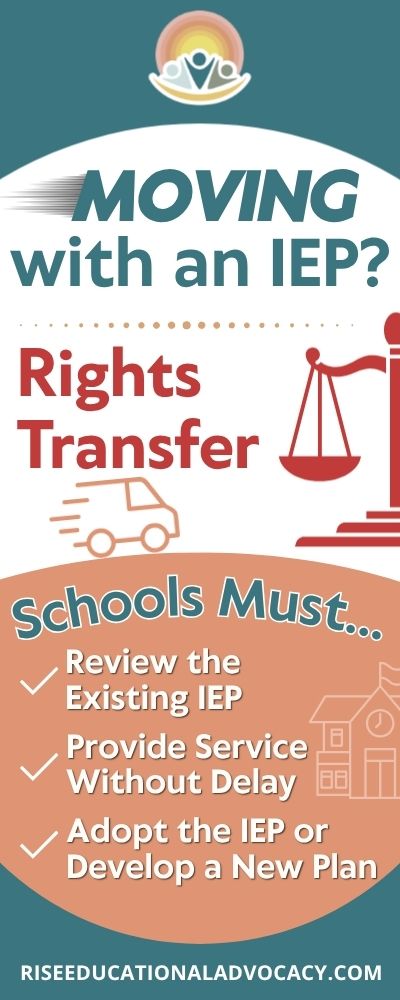
When you move with an IEP, your child's special education rights transfer.
The new school must review your current IEP and provide comparable services without delay. Moving is stressful for every family. But moving with an IEP can feel overwhelming.
Parents often ask:
- Will the new school follow my child’s IEP?
- Will my child lose special education services?
- Do new schools have to provide the same supports?
- What happens if we move to another state?
- Will my child need a new IEP or more testing?
Here’s what you need to know: Your child doesn’t lose their IEP when moving to a new public school.
An Individualized Education Program, or IEP, is a legal special education plan designed to help your child receive a Free Appropriate Public Education (FAPE).
Moving doesn't erase your child’s disability-related needs, services, accommodations, goals, or supports.
However, understanding the IEP transfer process will help you prevent service delays, ask the right questions, and prepare your child for a strong start at their new school.
Watch: Moving with an IEP?
This video explains what parents need to know before changing schools, districts, or states when an IEP is involved.
How to Transfer an IEP to Another School: What Happens Next
When a child with an IEP transfers to a new school, the new school must review the existing IEP, even if it's out of date.
Your child shouldn't be treated as though they're starting from zero. Just so you know, IEPs don't "expire" just because they're old or out of date. Your child remains eligible for special education services.
This means your new school must continue providing existing special education supports while it reviews the IEP and decides what happens next.
This is where you want to understand comparable services.
Comparable services are services similar to those listed in your child’s existing IEP. They may not look exactly the same, but they should address your child’s needs while the new district reviews the Plan.
For example, suppose your child previously received weekly speech, specialized academic instruction, OT, and paraprofessional support. The new district should determine how it will provide similar support during the transfer process.
Be cautious if a school says:
- “You didn't tell us about IEPs, so you'll have to wait.”
- “They can't keep IEPs if they're on permit.”
- “We only have inclusion, so they can't get pull-out.”
- “Their IEP expired, so they'll have to go back to general ed.”
- “We need to hire someone, so you'll have to wait.”
Schools may need time to review records, but your child should not be left without special education support while everyone waits.
Moving Within the Same State with an IEP
 Understanding how to transfer an IEP gives you a head start before the move happens. When your child transfers to another district within the same state, the new district may:
- Adopt the existing IEP (even if it's old), or
- Develop and implement a new IEP that meets state and federal requirements.
While your new district reviews the Plan, your child should receive comparable services.
Ask the school:
- “What comparable IEP services will be provided without delay?”
- “Will you adopt the current IEP or hold a new IEP meeting?”
- “When will services start?”
- “Who will be my child’s special education teacher?”
These establish expectations and prevent unnecessary service gaps.
Moving to Another State with an IEP
Moving to another state can be more complicated because states may have different special education rules, procedures, eligibility requirements, and timelines.
However, your child continues to have protections under the Individuals with Disabilities Education Act, or IDEA.
New schools must review the current IEP and provide comparable services as they determine the next steps.
They may propose updated special education evaluations, review your child’s eligibility under the new state’s rules, or convene an IEP meeting to develop a new Plan.
Your child should retain support during the IEP transfer.
Parents can ask:
- “What comparable services will my child receive while you review the current IEP?”
- “Are you proposing new IEP testing?”
- “Will services continue during the evaluation?”
- “When will my IEP team meet?”
- “Are you adopting the current IEP or developing a new one?”
What Are Comparable Services?
Comparable services don’t always mean new schools must copy previous IEPs word for word.
 However, services should be sufficiently similar to support your child’s identified needs.
For example:
- If your child received speech twice a week, the new school should consider a similar frequency.
- If your child received push-in occupational therapy, the new school should consider a comparable delivery model.
- If your child had a Behavior Intervention Plan, the new team should review and implement appropriate behavior supports.
- If they had math and reading goals, your team should address their academic needs.
Comparable services may not look identical, but they must still address your child’s needs and provide FAPE.
Ask your IEP team to clearly explain any differences. If they propose to reduce, remove, or change services, request Prior Written Notice.
You can ask:
- “What data supports this change?”
- “How will this proposal provide FAPE?”
- “How are these services comparable to the current IEP?”
- “Will you provide Prior Written Notice?”
 Should the New School Hold an IEP Meeting?
In many situations, holding an IEP meeting after a move is helpful.
New IEP meetings allow schools to learn about your child and explain how services will be provided. It also gives you the opportunity to discuss concerns and understand any proposed changes.
At the meeting, ask about:
- Special education and related services
- Behavior support
- Assistive technology
- Accommodations vs. modifications
- Placement
- Transportation
- Extended School Year services
- Progress reporting
- Support in general education
- Transition support after the move
Your new school may adopt the existing IEP or propose revisions. Remember that as parents you are a member of the IEP team. Your concerns, observations, and priorities should be considered before changes are made.
Can the New School Change My Child’s IEP?
New schools can propose changes to services, accommodations, placement, or supports.
However, changes should be based on your child’s individual needs- not simply the school’s available programs, staffing, or what they think your child needs.
If your team proposes a change, ask:
- “What data supports this recommendation?”
- “How will my child’s needs be addressed?”
- “How does this proposal provide FAPE?”
- “Provide Prior Written Notice explaining the changes.”
Moving on its own isn’t a reason to reduce or remove necessary support.
Will My Child Need a New Special Education Evaluation?
Possibly.
Reevaluations may be appropriate when your child moves to a new state, when existing evaluations are outdated, or when new teams need additional information to understand your child’s needs.
 However, IEP testing shouldn’t be used as a reason to stop services.
When schools propose IEP testing, ask:
- “What domains and/or related services will be assessed?”
- “Will standardized measures be given?”
- “Who will conduct testing?”
- “How will services continue during the evaluation?”
- “What’s the timeline? How many days will testing take?”
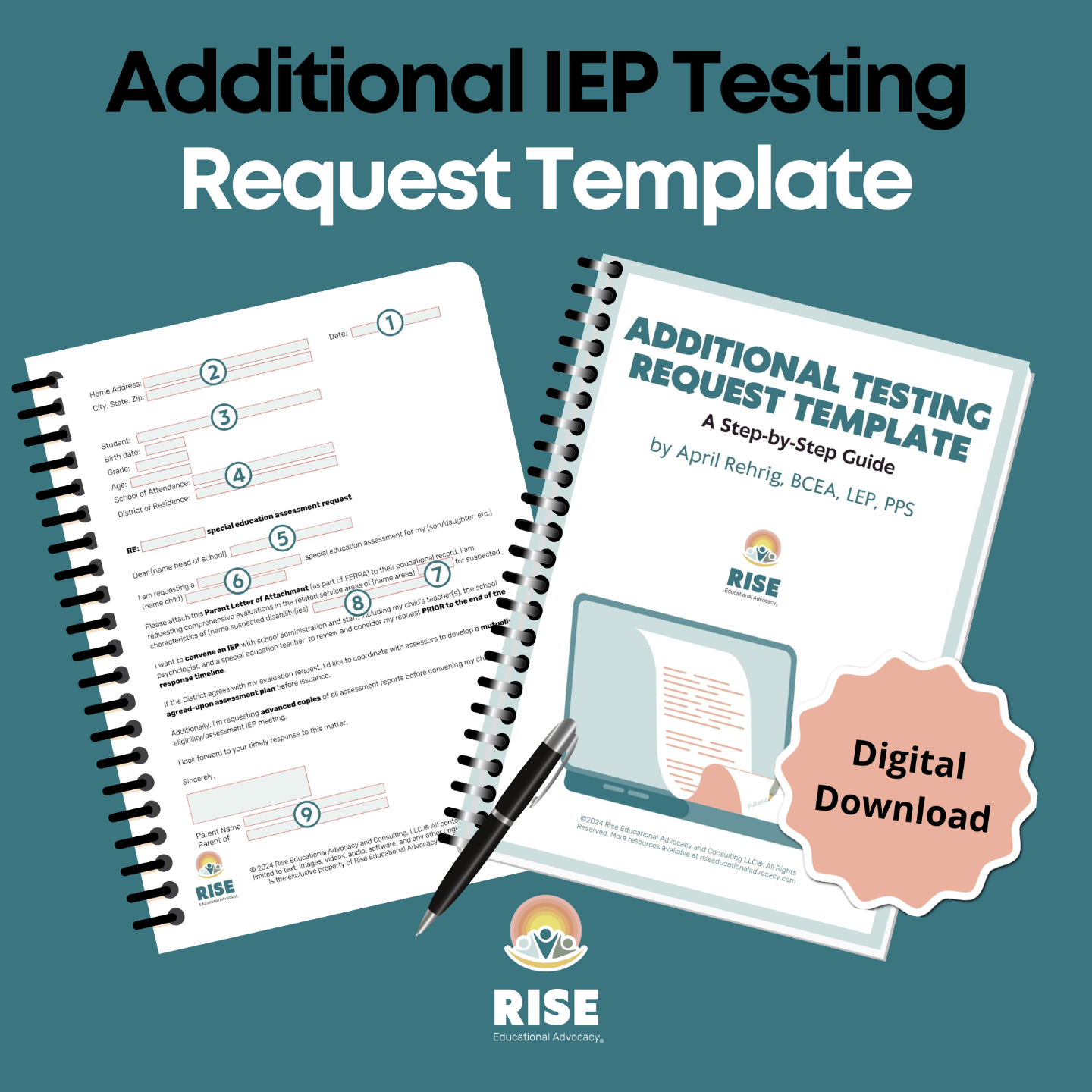
Make sure to submit a Parent Request Letter documenting your questions, concerns, or response to IEP testing.
What Parents Should Do Before Moving
A smooth IEP transfer starts with preparation on your end. Before moving, create an organized IEP binder or digital folder.
Include:
- The current IEP
- The most recent evaluation reports
- IEP progress reports
- IEP amendments
- Behavior Intervention Plans
- Functional Behavioral Assessments
- Health and safety plans
- Outside evaluations
- Prior Written Notices
- Important school emails
Keep both digital and printed copies.
Don’t wait for the old school to send IEPs. Records can be incomplete, misplaced, or not sent to the right personnel.
After enrolling, email your new district’s special education department:
“My child has an IEP, and we’ve enrolled. Please confirm you’ve received our records and will notify the appropriate personnel at our new school.”
This creates a written record and puts the district on notice.
What Parents Should Do After Enrolling
 After your child starts school, email their new principal or administrative designee.
Ask them to confirm:
- They received the IEP.
- Comparable services will be provided.
- The expected timeline for services to begin.
- Your child’s case manager.
- Whether they will adopt the IEP, schedule a new meeting, or propose IEP testing.
You can write:
“Please confirm you received my child’s IEP and that comparable services will begin while you review their services and supports.”
If someone calls or speaks to you in person, send a follow-up email:
“Thank you for speaking with me today. I understand you received my child’s IEP and that services will begin without delay. Please confirm that my understanding is correct.”
This isn’t being difficult. It’s proactive communication.
Questions to Ask When Moving with an IEP
Ask your school:
- When will IEP services begin?
- What comparable services will be provided?
- Who’s responsible for implementing the IEP?
- Will teacher(s) be notified?
- Will you adopt the existing IEP?
- Will you hold a new IEP meeting?
- Are you proposing new IEP assessments?
- How will my child be supported?
- How will progress be measured?
Moving with an IEP: The Bottom Line
Moving with an IEP feels scary, but your child’s rights don’t disappear when your address changes.
Before moving, organize your records. When enrolling, provide the current IEP immediately. After enrollment, confirm when comparable services will begin.
If your school proposes changes, ask for data, explanations, and Prior Written Notice.
Most importantly, remember:
A move changes your child’s school. It doesn’t erase their IEP rights.
Frequently Asked Questions About Transferring an IEP
Do IEPs transfer from school to school?
Yes.
When your child moves to a new public school, their IEP and their special education rights move with them. The new school must review the current IEP and provide comparable services without delay, even if their IEP is out of date.
Does an IEP transfer to another state?
Yes.
Your child’s protections under IDEA follow them to any state. The new state may have different rules, timelines, or eligibility requirements, so the new school may review the IEP, propose new testing, or hold a meeting to develop a new plan.
In the meantime, your child should keep receiving comparable services.
What is the IEP transfer timeline?
There’s no single nationwide timeline, since states set their own rules.
What matters most is that your child should not be left without support while the new school reviews the IEP. Comparable services should begin without delay, not weeks or months later.
What are comparable services when transferring an IEP?
Comparable services are services similar to those in your child’s current IEP.
They don’t have to match word for word, but they must address your child’s needs and provide a Free Appropriate Public Education (FAPE) while the new district reviews the plan.
For example, if your child had weekly speech therapy, the new school should provide something similar.
Will my child need a new IEP meeting after transferring?
Sometimes.
The new school may adopt your child’s existing IEP or hold a new meeting to develop one. A new meeting can be helpful, since it lets the school learn about your child and lets you raise concerns.
Either way, you are a member of the IEP team and your input should be considered before any changes.
Will my child need new testing after moving?
Possibly.
A new school may propose a re-evaluation if your child moves to a new state, if existing evaluations are out of date, or if the team needs more information.
Testing should never pause your child’s services. If the school proposes testing, ask what will be assessed, who will conduct it, and how services will continue during the process.
Can the new school change my child’s IEP after a move?
A new school can propose changes to services, accommodations, or placement, but those changes must be based on your child’s individual needs, not the school’s staffing or available programs.
Moving on its own is not a valid reason to reduce or remove support.
If the school proposes a change, ask for the data behind it and request Prior Written Notice.
Does an IEP transfer to college?
No.
IEPs come from IDEA, which only covers students through high school.
In college, students receive accommodations under the ADA and Section 504 instead, and they request those through the college’s disability services office.
Our guide on preparing for college with an IEP or 504 Plan explains this transition.
Need Help Understanding Your Child’s IEP?
If you’re moving with an IEP or trying to understand your child’s special education rights, Rise Educational Advocacy® helps you learn how to ask the right questions, understand the IEP process, and build stronger support for your child.
Through our expert advocacy, parent IEP coaching, IEP workshops, and practical guides, we show you how to turn an overwhelming IEP into a strengths-based plan.
Your child deserves an IEP that follows and supports them to make meaningful progress.
Get started today with a parent consultation.
April Rehrig, BCEA, LEP, PPS, CASDCS, is the owner and founder of Rise Educational Advocacy and Consulting, LLC.