
Does Your Child Need Speech Therapy? 5 Signs Parents Should Know
Guest blog by Kristy King, M.S., CCC-SLP, founder and director of Kristy King Speech and Learning
As children return to school, the communication demands of their day increase.
They're expected to follow directions, explain their thinking, participate in conversations, and use increasingly complex language for reading and writing. For some children, these increased demands can make speech or language difficulties more noticeable.
Not every difficulty means a child has a speech-language disorder or needs therapy. What matters is whether a consistent pattern affects the child's ability to communicate, learn, or participate.
Here are five signs worth a closer look.
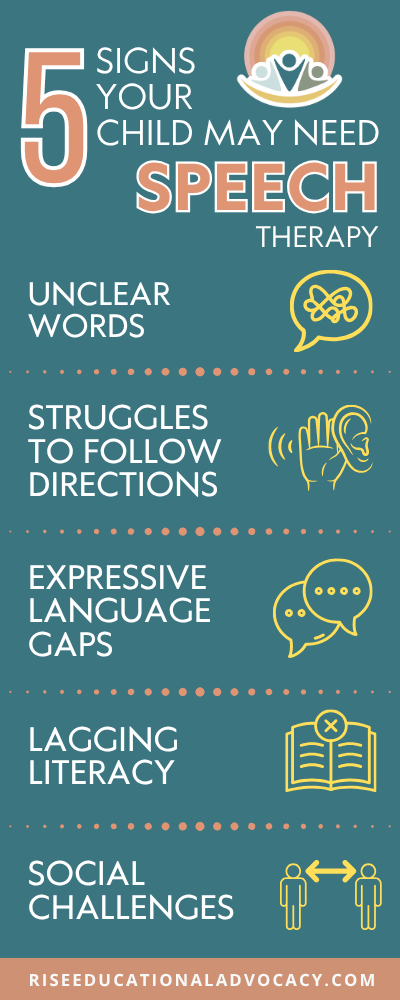 Your Child's Speech Is Difficult for Others to Understand
Family members and other familiar listeners often follow a child's speech more easily because they know the child's speech patterns.
They also have contextual information that helps them figure out what the child is trying to say. At school, new teachers and peers don't have that same familiarity or context. Classrooms can also be noisy, with competing voices and background sounds that can make communication even more challenging.
There are many reasons a child's speech may be difficult to understand. They may substitute one sound for another, omit sounds in words, or have difficulty producing certain sounds clearly.
While developmental expectations can help us determine whether speech sounds are developing appropriately, I also consider whether errors are persisting over time and how clear the child's speech is to others.
Speech-sound errors become more concerning when they interfere with a child's ability to communicate clearly or cause frustration.
When a child isn't confident that others will understand them, they may hesitate to speak up, raise their hand less, or participate less in conversations. A parent may see a talkative, social child at home, while the teacher sees a quieter or less engaged child.
Clear communication can help a child feel more confident participating and sharing their ideas.
Following Classroom Directions Is Harder Than Expected
A child who is having difficulty following classroom directions doesn't always look confused.
While the rest of the class gets started, the child may sit and look around the room or begin doing something different than what was instructed. From the outside, this can look like a child who missed the directions or is choosing not to follow them. In reality, the difficulty may be with understanding the language, processing the information, or creating a plan for what to do.
Following a direction requires a child to make sense of what is being asked, hold the information in their mind, sequence the steps, and create a plan for what to do. Directions can become more challenging when they contain multiple steps or unfamiliar vocabulary.
Even a direction a child can easily follow one-on-one may be harder in a classroom with a faster pace, sensory input, competing voices, and background noise.
When I hear that a child has difficulty following directions, I want to know where the breakdown is occurring. Does the child do better when directions are shortened, repeated, paired with visual supports, or when additional processing time is provided?
Identifying what helps can guide how we support the child in the classroom.
Your Child Knows What They Want to Say but Has Trouble Getting It Out
Sometimes a child's understanding is much stronger than their ability to express their ideas, either verbally or in writing.
A child may follow a story, classroom lesson, or conversation but have difficulty explaining the information or putting their ideas into words. This can make it difficult for others to recognize the child's level of understanding, even when the child has important ideas to share.
When a child has difficulty finding the words they want to use, you might notice them repeat words or phrases, pause frequently, say “um,” or use vocabulary that doesn't seem quite right.
When organization is the challenge, they may jump between ideas or events, making it difficult for the listener to follow.
 These difficulties can become more noticeable as language demands increase and children are expected to summarize information, explain their thinking, make inferences, or defend an opinion.
Difficulty expressing ideas clearly can show up in classroom discussions, written work, and assessments, and may make it harder for others to recognize a child's abilities.
Reading and Writing Seem Harder Than You Would Expect
A child's oral language skills provide an important foundation for learning to read.
Phonological awareness, the ability to recognize and work with sounds in spoken language, is an important skill in early reading development. Difficulties recognizing, blending, or manipulating sounds can make learning to read more challenging.
A child may also read words accurately but have difficulty understanding what they have read, including identifying the main idea, sequencing events, making inferences, or summarizing.
Writing places its own demands on language. A child must take their ideas and formulate them into clear, complete, and organized sentences.
Parents are sometimes surprised to learn that speech-language pathologists may address language skills related to reading and writing, but many of the same language skills children use to communicate are also important for literacy.
When reading or writing seems unexpectedly difficult, it's worth considering whether underlying speech or language skills may be contributing.
Social Communication Is Affecting Peer Interactions
A child can be very talkative and still have difficulty with social communication.
What matters isn't only how much a child talks, but how they interact with others. Can they engage in back-and-forth exchanges, stay on topic, consider a peer's perspective, and understand humor? When a conversation breaks down, can they reword an idea or clarify what they mean to keep the conversation going?
Not every child who is quiet, shy, or prefers fewer social interactions has a social communication difficulty. I become more concerned when there are repeated breakdowns with peers, difficulty maintaining friendships, or challenges participating in small-group activities.
The question is whether social communication difficulties are affecting the child's relationships or ability to participate successfully with others.
When Is an Evaluation Helpful?
A speech-language evaluation is about much more than determining whether a child has a disorder.
It can help us understand a child's speech and language profile, including areas of strength or difficulty and how those skills are showing up at home, at school, and socially. When challenges are identified, the results can guide recommendations for strategies, accommodations, therapy, or additional assessment.
Just as importantly, an evaluation may show that a child's skills are developing appropriately and that no services are needed.

School-Based Speech-Language Services and IEPs
A private diagnosis does not automatically mean that a child will qualify for an IEP or school-based speech-language services.
School-based eligibility considers how a child's difficulties affect their educational performance and whether they need special education and related services. Educational impact isn't limited to grades; communication difficulties can affect classroom participation, peer relationships, reading and writing, independence, and a child's ability to demonstrate what they know.
A private evaluation can provide valuable information for the school team to consider, even when the school and private evaluator ultimately make different recommendations.
Similarly, a child who does not qualify for school-based services may still have speech-language needs that a family chooses to address through private therapy.
School-based eligibility and the need for private services are separate considerations.
When You're Not Sure, Start With Questions
The beginning of a new school year brings new teachers, routines, expectations, and classmates, and it can take time for children to adjust.
If you recognize some of these signs in your child, start by looking for patterns rather than assuming something is wrong. Are you noticing the same difficulty consistently? Has it been noticed before? Ask your child's teacher what they are observing. Most importantly, talk with your child about what feels easy and what feels difficult.
You don't need to rush into therapy.
Sometimes monitoring and gathering more information is the right next step. If concerns persist, a conversation with a speech-language pathologist can help determine whether an evaluation might be helpful.
Taking the time to understand how a child communicates and learns helps us make thoughtful decisions about what support, if any, they need.
Frequently Asked Questions
What is a speech-language evaluation?
A speech-language evaluation typically includes a parent interview, direct assessment with the child, and a follow-up session to review findings and recommendations.
Depending on the referral concerns, the evaluation may assess speech-sound production, receptive and expressive language, social communication, narrative language, and literacy-related skills.
Classroom observations, teacher input, work samples, and previous evaluations or records may also be included as needed.
Can a child get an IEP for speech or language?
Yes.
A child may qualify for an IEP when a speech or language impairment affects their educational performance, and they need special education or related services. Educational impact can extend beyond grades to areas such as classroom participation and communication.
A child who does not qualify for an IEP may still qualify for accommodations through a 504 Plan.
Can speech and language difficulties affect reading and writing?
Yes. Oral language skills provide an important foundation for literacy.
Phonological awareness supports learning to read, while vocabulary and language comprehension help children understand what they read. Expressive language skills, including sentence formulation and organizing ideas, also support written expression.
Difficulties in any of these areas may affect a child's reading or writing development.
When should I consider having my child evaluated?

If you have concerns about your child's speech or language skills and notice a consistent pattern, it may help to gather more information. An evaluation can clarify your child's speech and language profile, including areas of strength and challenge, and help determine whether additional support is needed.
Reach out to Kristy King Speech and Learning to learn more about supports for your child.
Kristy King, M.S., CCC-SLP, is the founder and director of Kristy King Learning and Speech in San Diego, California